Category Archives: Clive Hilton

Clive Hilton Interviews

Mental Health: Are You Okay? The Question That Saves Lives

Sunday Brunch featured soundbytes from the above ‘Sussex & Surrey Soapbox’ podcast episode…. to skip chapters click on the 3 horizontal lines (left in the above player). Have your say via WhatsApp (bottom right) or join the conversation in our Facebook Group HERE.

One in four adults will face a mental health problem each year across the SUSY area, but numbers don’t capture the quiet part: the loneliness, the slow slide, and the moment someone realises they’re not coping. From the Red Lion & Cellar Room in Betchworth, Surrey, we talk plainly about mental health in Sussex & Surrey and why it’s showing up more in everyday life, workplaces, and friendships.

Maureen Jones, a psychotherapeutic counsellor, shares what she’s seeing more of: anxiety, depression, isolation after Covid, and that undercurrent of not belonging. We dig into early warning signs many people miss, like broken sleep, irritability, comfort eating, zoning out, and feeling emotionally numb. We also come back to one simple habit that can cut through all the awkwardness: asking “Are you okay?” and meaning it.

Our special guest Graham Dearing from Menshare Listening Group tells his story, from pushing through school and building a high-pressure finance career to hitting a point where “buckle down and work harder” stopped working. He talks candidly about imposter syndrome, unrealistic roles, trying different medications and therapies, and why empathy and confidentiality in peer groups can be the support that finally lands. We also discuss barriers to workplace help, concerns about privacy, and the bigger picture around crisis care, including NHS plans for mental health A&E and the need for proper follow-up and long-term talking therapy.

If you’re looking for support, we point to Menshare Listening Group and Sistershare across the area, and Maureen wraps up by sharing practical guidance on finding properly qualified private counselling through the Counselling Directory. 

Roundtable Featuring: Graham Dearing (Menshare Listening Group), Maureen Jones, Georgie Lucas, Iqbal Khan, Aga Es & James Tidy. Host: Clive Hilton. 

Why Don’t We Vote? The Local Politics Reality Check


Sunday Brunch featured a special programme dedicated to the upcoming elections. If you missed it – tune into the midweek catch up this Wednesday at midday or via ‘Sussex & Surrey Soapbox’ podcast across all platforms…. to skip chapters click on the 3 horizontal lines (left in the above player). Have your say via WhatsApp (bottom right) or join the conversation in our Facebook Group HERE.

Local Elections SPECIAL – Featuring: 

Cllr Richard Biggs (Conservative) – Leader of Reigate and Banstead BC, Councillor for Horley West and Sidlow.

James Tidy (Reform UK), Vice Chairman of Reform UK, Crawley.

Cllr Abigail Chapman-Miller (Labour) – Parish Councillor & sits on East Surrey Executive Committee.

Cllr Mark Smith (Independent) – Councillor in Redhill and sit on Reigate & Banstead BC.

Cllr Bob Lanzer (Conservative) – West Sussex County Council Councillor and cabinet member for Public Health and Wellbeing, Cllr Crawley BC.

Hosts: Tony Williams, Clive Hilton and thank you to Jacq Inwood for production assistance.

Only 1 in 3 people vote in local elections… yet the outcomes shape our everyday life — from the state of the roads and high streets, to the cost of your housing and even how quickly you can see a GP.

So why do so many people feel disconnected from local politics?

In this special episode, recorded in Copthorne ahead of polling day on 7 May, we bring together voices from across the political spectrum — Conservative, Labour, Reform UK and an Independent councillor — to move beyond slogans and confront what residents across Sussex and Surrey are actually saying.

We put the real, unfiltered comments from local Facebook groups to the panel and challenge them to respond to the issues people care about most — and the answers aren’t always comfortable. Tony and Clive help turn up the heat to ensure a BS, word-salad free answer!

From housing pressures and crumbling infrastructure to immigration, council tax and the growing toxicity of online debate, this is a frank, grounded conversation about trade-offs, accountability and whether local leaders are truly listening AND serving the community.

If you’ve ever wondered whether your vote across Sussex & Surrey really makes a difference — this episode is for you.

Please share with others and we would love to hear  What one change would improve your town most?

Key Topics:

  • 90-second pitches from Conservative, Labour and Reform on priorities and misconceptions 
  • Raw resident feedback ‘what ONE thing need fixing in this town’: potholes, roads, housing, drugs, lack of leadership, councils/councillors, litter, high street decline and immigration (well over 50 responses).
  • Housing crisis: supply vs affordability, social housing and rising rents 
  • Infrastructure lagging behind development: roads, GPs, schools and transport 
  • Local government shake-up: unitary authorities, devolution and democratic accountability 
  • Party politics vs grassroots councils: should local decisions be less political? 
  • Social care pressures, stretched budgets and the reality behind council tax rises 
  • Potholes and road maintenance: funding, quality and long-term fixes 
  • Immigration and asylum: hotel use, processing delays and policy tensions 
  • Civility in politics: social media toxicity and its impact on public service 
  • Gatwick expansion: economic opportunity vs local impact

The 2026 Classroom: A Teacher’s Reality Check


Sunday Brunch featured soundbytes from the above ‘Sussex & Surrey Soapbox’ podcast episode…. to skip chapters click on the 3 horizontal lines (left in the above player). Have your say via WhatsApp (bottom right) or join the conversation in our Facebook Group HERE.

What does teaching really look like in a modern secondary school?

In this episode, Amanda, a passionate teacher from Surrey, shares an honest look at life inside today’s classrooms. From 30+ student classes and rising SEND needs, to the behaviour challenges that emerged after COVID, she explains what teachers are really dealing with and why the story is far more complex than headlines suggest.

We talk about the fragile partnership between schools and parents, why the “teaching has gone soft” narrative misses the bigger cultural shift, and what it actually takes to help a mixed-attainment class succeed without leaving anyone behind.

Amanda also shares practical advice for families, why resilience matters more than ever, and how small habits at home can make a huge difference to a child’s confidence and learning.

If you care about education, inclusion, and raising resilient young people, this episode offers clear insight straight from the classroom.

10 Key Points

1) Classrooms now regularly include 30+ students with a wide range of learning levels and needs

2) Post-COVID changes have affected student resilience, focus, and behaviour

3) Behaviour systems only work when parents and schools work together

4) The “teaching has gone soft” narrative overlooks wider cultural changes around authority

5) Rising SEND diagnoses may reflect better recognition rather than overdiagnosis

6) Teachers spend significant time adapting lessons for mixed-attainment classrooms

7) Resilience and confidence grow when students face challenges rather than avoid them

8) Simple habits at home—like checking homework apps and discussing the news—support learning

9) Funding pressures and teacher retention are shaping the reality of schools

10) Even sports day matters, teaching children how to handle both winning and losing

Roundtable Featuring: Amanda (guest), Georgie Lucas, Micaela Leal, Jacq Inwood, Maureen Jones & James Tidy. Host: Clive Hilton. 
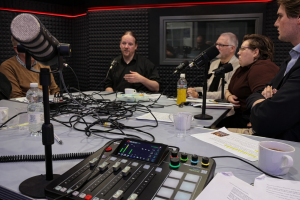
International Women’s Day: ‘Give to Gain’


Sunday Brunch featured soundbytes from the above ‘Sussex & Surrey Soapbox’ podcast episode…. to skip chapters click on the 3 horizontal lines (left in the above player). Have your say via WhatsApp (bottom right) or join the conversation in our Facebook Group HERE.

On International Women’s Day 2026, this roundtable with special guest Maggie Chen (Founder of GIC, www.girlsincharge.co.uk) goes far beyond celebration. Under this years IWD theme “Give to Gain,” the panel explores what equality really looks like — at work, at home, and in the everyday moments that shape confidence and opportunity.

From career-defining champions who opened doors, to uncomfortable debates about whether progress has gone “too far,” the conversation doesn’t shy away from tension. The group unpacks the gender pay gap, unconscious bias, networking advantages, and the often-invisible mental load women carry at home.

Stories of quiet advocacy — someone “sending your name into a room you’re not in” — reveal how small acts of generosity can transform careers and lives. At the same time, the discussion challenges partners, families, and workplaces to rethink roles, responsibility, and recognition.

Is equality about identical outcomes? Is feminism creating friction? Do men feel pushed out? And what does it truly mean to “give” in order to gain — as individuals, couples, and communities?

This is an honest, multi-generational conversation about respect, responsibility, and the role of partners in building a more balanced future. 

10 Key Points:

1. International Women’s Day is more than a checkbox.
It should spark action that lasts all year, not just symbolic recognition.

2. “Give to Gain” isn’t just about money.
It’s about advocacy, visibility, time, mentorship, and emotional support.

3. Career-defining champions matter.
Having someone advocate for you in rooms you’re not in can change the trajectory of your life.

4. The gender pay gap is complex.
Legal equality exists, but cultural patterns — networking habits, caregiving roles, self-selection — still influence outcomes.

5. Networking advantages aren’t neutral.
Informal, after-work networking often benefits men more due to differing home responsibilities.

6. The invisible mental load is real.
Women frequently carry the cognitive burden of planning, anticipating, and managing household life — even when tasks are shared.

7. “How can I help?” can feel like another task.
Delegating help adds to the mental load; shared ownership works better than reactive assistance.

8. Equality conversations create discomfort — and that’s part of growth.
Some men feel blamed; some women feel overdue recognition. Honest dialogue is necessary.

9. Appreciation may matter as much as redistribution.
For many, feeling seen and valued is as important as dividing chores evenly.

10. Respect is the foundation.
Whether at work or at home, progress depends on mutual respect, partnership, and shared responsibility.

Roundtable Featuring: Maggie Chen (guest), Georgie Lucas, Micaela Leal, Jacq Inwood, Maureen Jones & James Tidy. Host: Clive Hilton. 

Are Weekend Trains a Rip-Off? A Train Driver Tells the Truth


Sunday Brunch featured soundbytes from the above ‘Sussex & Surrey Soapbox’ podcast episode…. to skip chapters click on the 3 horizontal lines (left in the above player). Have your say via WhatsApp (bottom right) or join the conversation in our Facebook Group HERE.

Are weekend trains in Sussex and Surrey actually fit for purpose—or are passengers being short-changed? In this lively roundtable, a train driver pulls back the curtain on why weekend rail travel feels so broken.

10 key aspects we tackle:

  1. Why weekends feel worse than weekdays
    Delays, cancellations, diversions, overcrowding—listeners’ lived experience clashes with “acceptable” official stats.
  2. The engineering works problem
    Weekend closures are constant, but poor coordination turns necessary maintenance into total network chaos.
  3. Staffing myths vs reality
    It’s not drivers “pulling sickies”—Sunday working contracts and rostering rules leave services fragile.
  4. A fragmented rail system
    Too many companies, too many silos—operators, Network Rail, leasing firms and contractors all passing the buck.
  5. Fares that feel like a rip-off
    UK rail tickets are expensive and painfully complex, leaving passengers confused and overpaying.
  6. Victorian infrastructure in a modern world
    Outdated tunnels, ageing signalling and underinvestment make the system fragile—and weekends pay the price.
  7. Will renationalisation fix anything?
    Great British Railways promises joined-up thinking, but nationalisation alone isn’t a magic wand.
  8. Automation vs human presence
    Driverless trains might be efficient—but what about safety, reassurance, and antisocial behaviour onboard?
  9. The reality of being a train driver
    Extreme shift work, high responsibility, health impacts—and why drivers defend their pay and conditions.
  10. What would actually make trains better
    Longer turnarounds, smarter planning around major events, real coordination between companies, and putting passengers first.

Bottom line: Weekend trains aren’t failing by accident—they’re the product of a complex, underfunded, poorly joined-up system. The question is whether the next phase of rail reform starts to fix it… or just rebrands the problem.

Roundtable Featuring: Stephen Pritchard (Train Driver), Georgie Lucas, Iqbal Khan, Aga Es, Jacq Inwood, James Tidy and Maureen Jones. Host: Clive Hilton.